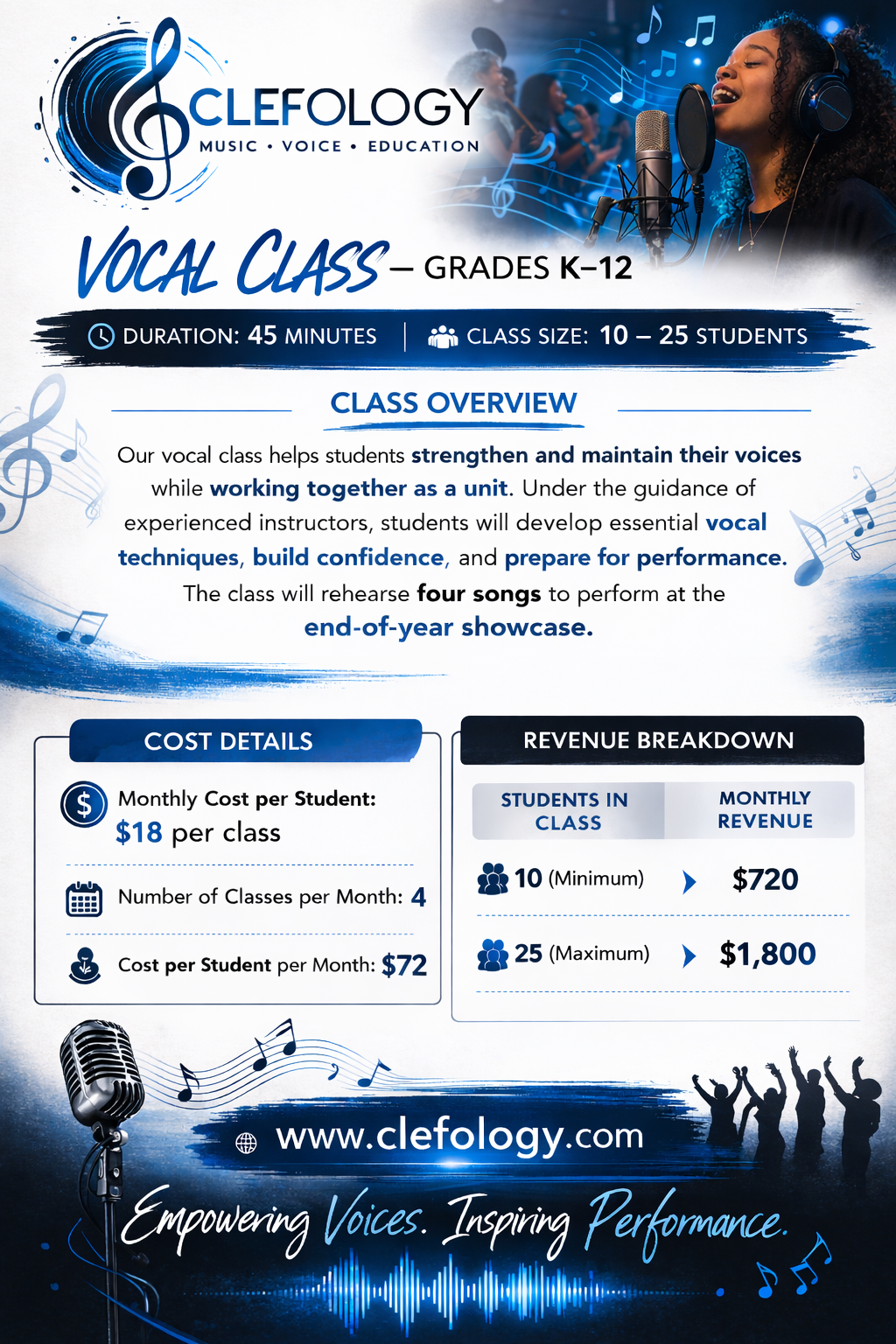
Voice ensemble: a scalable tool for social-emotional learning across grades and settings. Intentional speaking, singing, reading, and sharing help students name emotions, build relationships, and improve academics.
Key benefits
Emotional expression & regulation: Vocal activities—storytelling, guided reflection, breath-and-voice exercises—help students label feelings, practice calming strategies, and rehearse healthier responses.
Social awareness & empathy: Hearing peers’ stories and readings fosters perspective-taking, reduces bias, and eases conflict.
Self-efficacy & identity: Regular opportunities to speak and be heard build confidence, agency, engagement, and persistence.
Communication & relationships: Voice practices teach clear expression, turn-taking, active listening, and respectful feedback—skills essential for teamwork, conflict resolution, and leadership.
Cognitive & academic gains: Vocal rehearsal supports language development, memory, attention, reading fluency, comprehension, and retention.
Classroom uses
Storytelling and reader’s theater
Presentations and reflective journaling aloud
Breath-and-voice warm-ups and regulation exercises
Peer interviews and shared readings
Structured group discussions and speaking circles
Brief implementation note Voice ensemble activities are adaptable for short daily routines or longer lessons, suitable for whole-class, small-group, or hybrid/remote settings.
Voice Class